
Turn Elevation Changes Into Usable Outdoor Space
Oasis Scapes builds retaining walls in Chatham, New Jersey that stabilize slopes and create level areas for patios, lawns, and planting beds
Oasis Scapes constructs retaining walls for homeowners in Chatham, New Jersey who need to manage sloped yards, prevent soil from washing downhill, or carve out flat space where the property drops steeply. You may see exposed tree roots along a slope, erosion channels after heavy rain, or sections of yard that are too steep to mow or plant effectively. These conditions call for a structure that holds soil in place while creating defined, level zones.
Walls are built using concrete block, natural stone, or modular systems chosen based on height, load, and the look that suits your home. Each wall includes a compacted base, proper backfill, and integrated drainage to prevent water pressure from building behind the structure. Without drainage, hydrostatic pressure can shift or crack even well-built walls over time. The work often improves curb appeal while solving grading problems that limit how you use your yard.
If your property has elevation changes that create maintenance problems or wasted space, a consultation can review whether a new wall or replacement of a failing structure makes sense.
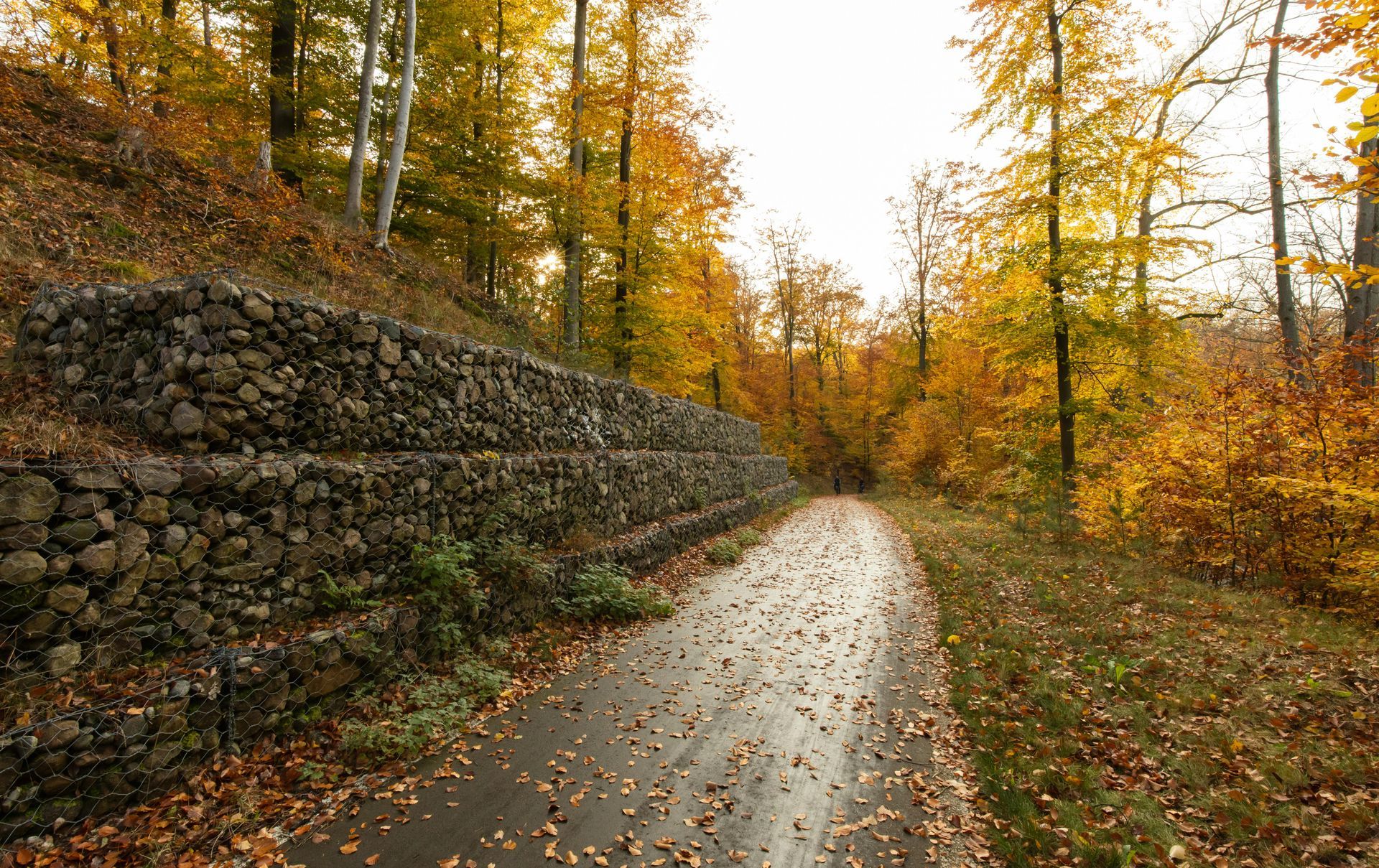
What Goes Into Building a Wall That Lasts
Construction starts with excavation to reach stable soil below the frost line, followed by a compacted gravel base that prevents settling. The first course of block or stone is leveled carefully, since everything above it depends on that initial alignment. Each row is set with a slight backward lean, and joints are staggered for structural integrity. Drainage pipe and gravel backfill are installed behind the wall as it rises.
Once complete, the wall holds soil at the designed height without bulging or shifting. You gain flat space above or below the wall that can support a patio, lawn, or garden bed. Erosion stops, and the yard develops clear, usable zones instead of one continuous slope. Oasis Scapes ensures that caps and finishing details match the material palette of your home and landscape.
Walls taller than a certain height may require engineering review depending on local codes. Some projects involve tiered walls with planting terraces between levels, while others include steps or transitions to connect upper and lower areas. The final design depends on the degree of slope, soil type, and how you intend to use the space once it is level.
What Homeowners Want to Know About Retaining Walls
Questions often focus on material longevity, drainage requirements, and what happens to existing plants or structures near the wall.
What is the difference between concrete block and natural stone walls?
Concrete block systems use interlocking units that install quickly and offer consistent dimensions. Natural stone is laid individually and provides a more varied, organic appearance.
How does drainage work behind a retaining wall?
Perforated pipe is placed at the base of the wall in a gravel bed, with weep holes or outlet pipes allowing water to exit. This prevents pressure buildup that could cause the wall to lean or crack.
When does a retaining wall require engineering?
In Chatham, walls over four feet tall typically need a structural review to ensure adequate footing depth, reinforcement, and soil bearing capacity.
Why do some old walls lean or separate at the joints?
Walls built without proper base preparation, drainage, or backfill compaction often shift as soil freezes, thaws, and saturates over multiple seasons.
How long does construction take for a typical residential wall?
A single-tiered wall under four feet tall and twenty feet long usually takes two to three days, including excavation, installation, and backfill. Taller or longer walls require more time.
If you are dealing with a failing wall or want to add usable space on a sloped lot, a site visit will clarify what type of wall works best and how it integrates with drainage and landscape features already in place.